
Housing Research Program
CCPA-NS - Nova Scotia Alternative Budget 2026: For the Many
Community Legal Workers from Dal Legal Aid, alongside dozens of community groups, contributed to the Canadian Centre for Policy Alternatives Nova Scotia’s (CCPA-NS) Alternative Budget 2026.
From the CCPA-NS: “The alternative budget shifts the focus from supporting the few who benefit from outsourcing and offshoring, privatization, and resource extraction, to supporting the many who want a more equal, democratic, caring, and sustainable society. Now more than ever, we need alternative ideas about how to organize our economy and society.”
You can read more and download the full report here: https://www.policyalternatives.ca/news-research/nova-scotia-alternative-budget-2026-for-the-many/
Understanding Access to Justice for Tenants in Nova Scotia
In May 2025, we launched a survey of tenants in Nova Scotia as part of our Housing Research Program led by Community Legal Worker Dr. Hannah Main. This program was designed to fill the gaps in data about renting in Nova Scotia. There's a serious shortage of information about tenants' experiences, as the government doesn't publish key information from Residential Tenancies. Throughout the next year we'll be analyzing data from the Residential Tenancies Program, and gathering insights directly from tenants through a survey on rental experiences and access to justice.
Our first report based on this survey, Human Rights in a Housing Crisis, launched on Wednesday, October 22nd, 2025 with an event at the Schulich School of Law.
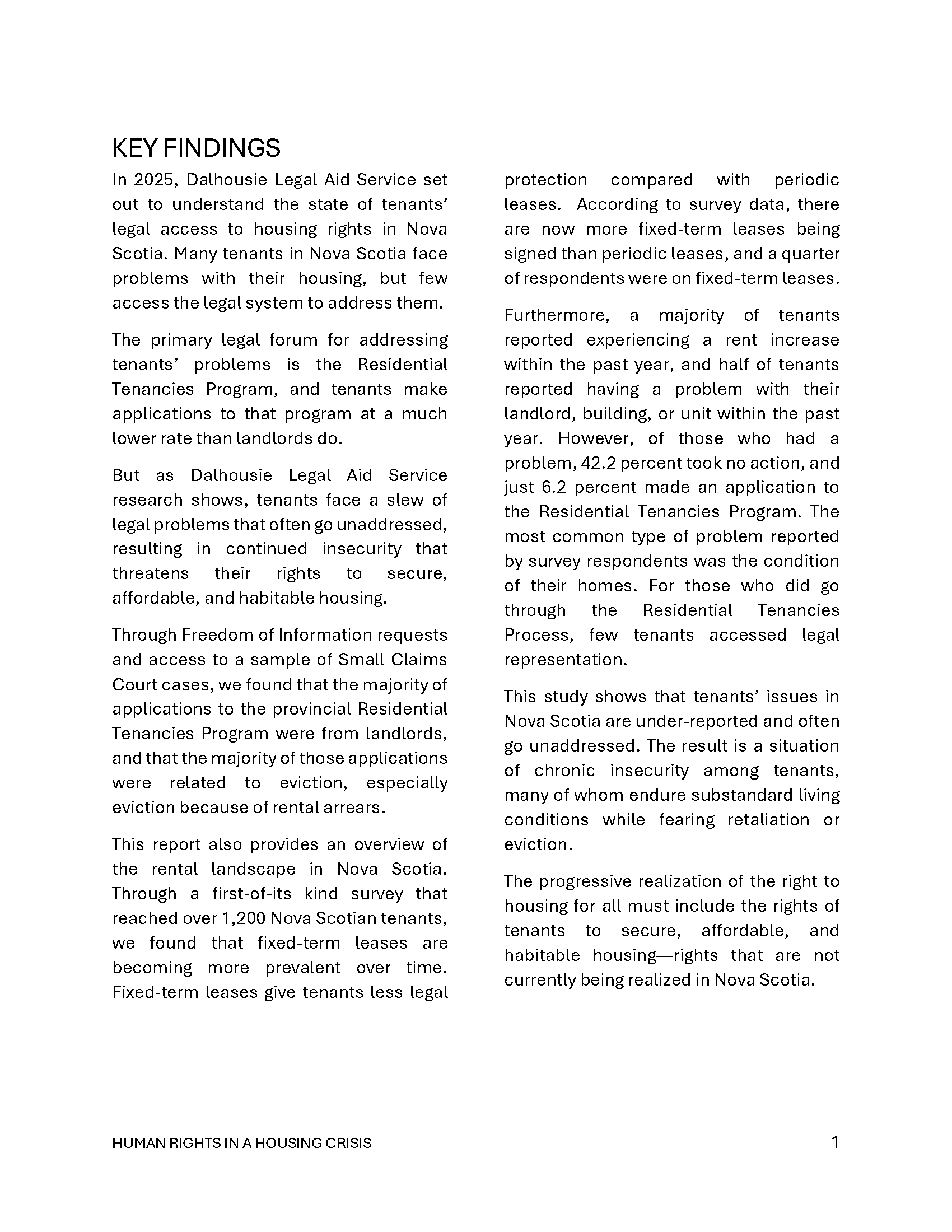
The Human Rights in a Housing Crisis study, based on a province-wide survey of over 1,200 tenants and analysis of Residential Tenancies Program applications and decisions, shows that tenants face a slew of legal problems that often go unaddressed, resulting in continued insecurity that threatens their rights to secure, affordable, and habitable housing.
The study finds that fixed-term leases are becoming more prevalent over time in Nova Scotia, with a quarter of survey respondents reporting having a fixed-term lease. Of the tenants who signed their lease in 2025, over half report having a fixed-term lease. “Fixed-term leases lack security of tenure, a key component of the right to housing,” said Community Legal Worker Hannah Main, who co-authored the study. “For the right to housing to be realized, tenants need to know that they will not be forced out of their homes without cause or notice.”
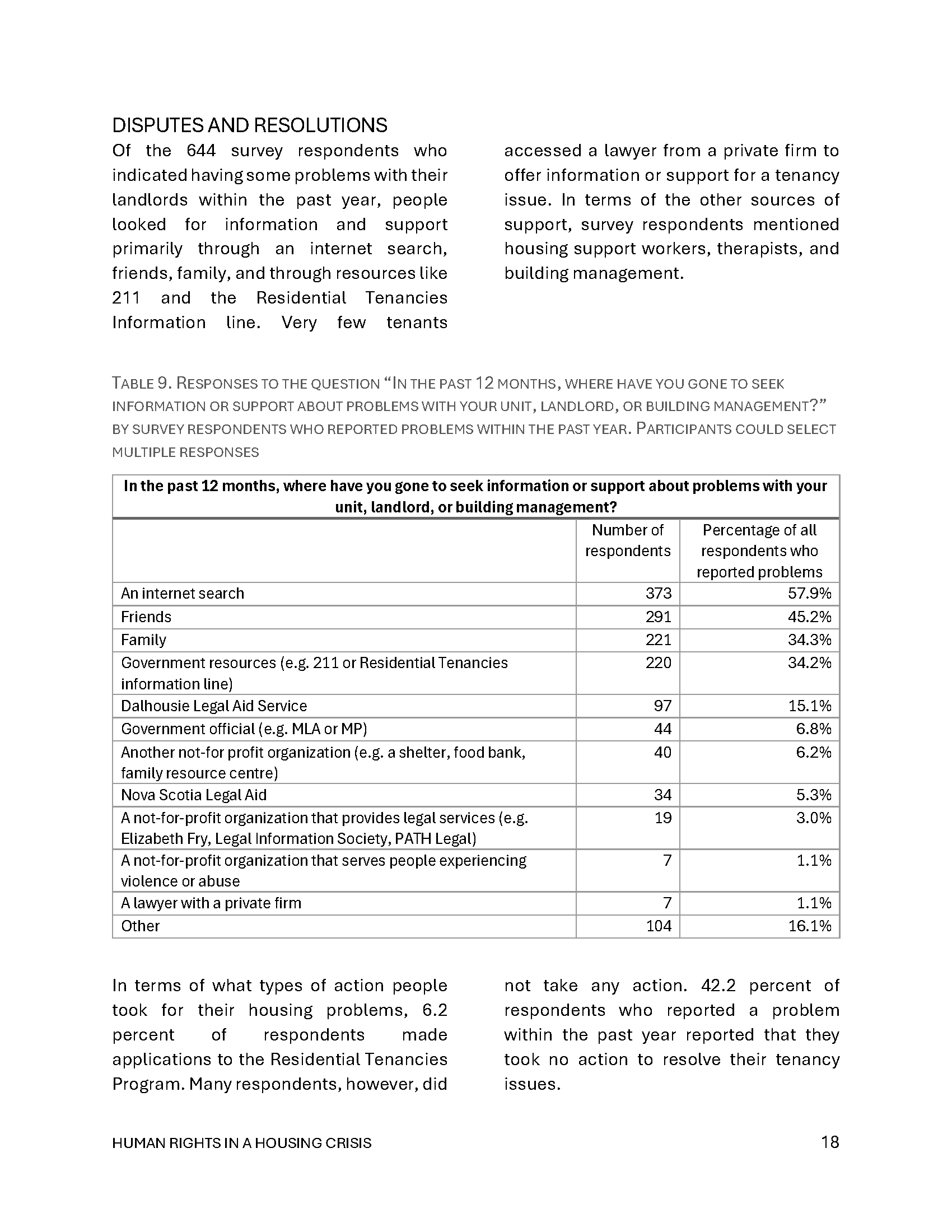
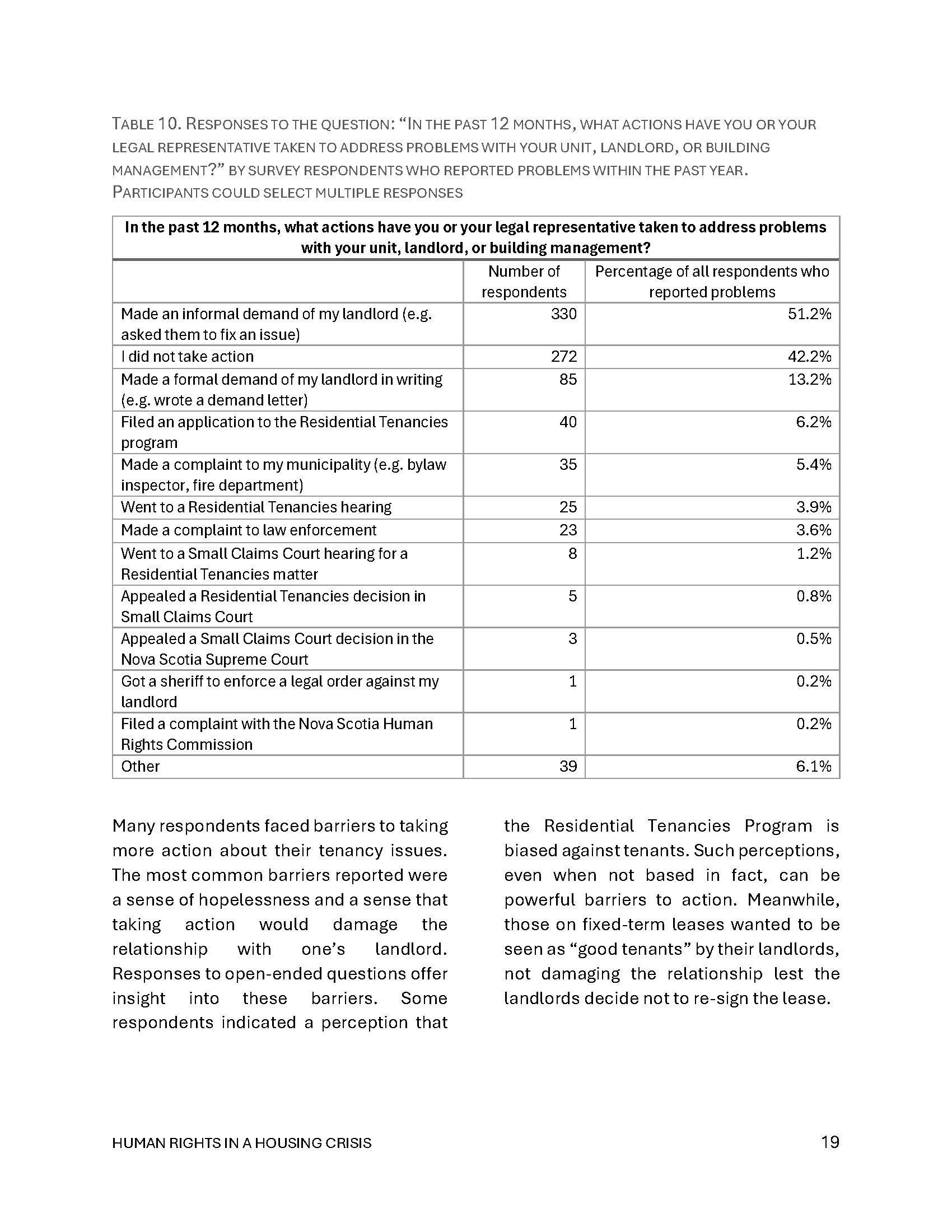
The tenants’ survey also shows that the majority of tenants report a rent increase within the past year, and half of respondents report having a problem with their housing within the past year. However, many tenants took no legal action about their problems: only 6.2 percent of tenants report making an application to the Residential Tenancies Program for their issues. Residential Tenancies Program data shows that tenants apply to the Program at a much lower rate than landlords do, and that most tenants lack legal representation.
This report calls for legislation and policy to take tenants’ rights to housing into account. Governments at every level have a commitment to work towards the realization of the right to housing for all. Tenants’ rights are a crucial part of addressing the ongoing housing crisis.
Read the report below, or click here to download as a PDF.






You should discuss any questions you have about this program with Lead Researcher Hannah Main: Hannah.Main@dal.ca \ 902-423-2158